
Automation is the technique to reduce human intervention in industrial machine processes. This technology has been continuously developed by the industries because it has reduced the cost of human labor and the risks associated with it, and has also increased the efficiency and speed of work.
After the practical implementation of AI technology, it is being used in every field to increase efficiency and speed. Automation, which has already become the backbone of big industries, is going to have the highest demand for the practicality of its use. In fact, perhaps the most commercial use of AI technology is going to be in automation itself, also known as intelligent automation.
Artificial intelligence technology combines with traditional automation techniques to create systems that will not only reduce human intervention but will also develop sufficient adaptability within itself as per the greatest need of the industries. AI technology will also enable traditional automation systems to perform new tasks without any human supervision or intervention. AI technology is making the execution of traditional automation techniques faster, more efficient simple and amore daptable.
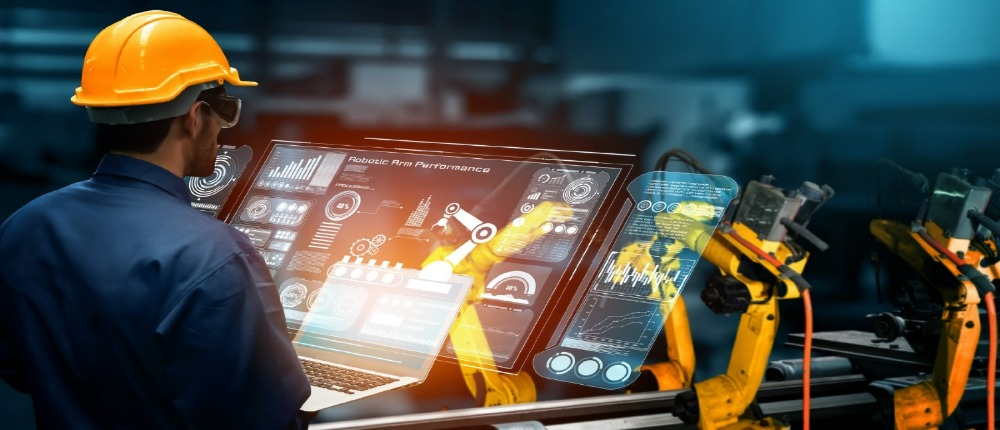
Relevancy of AI in automation technology
AI Automation integrates advanced techniques such as Artificial Intelligence (AI), Machine Learning (ML) and Natural Language Processing (NLP) into automated systems to perform industrial processes with greater speed and efficiency with minimal human intervention.
Automation is not only being used in industrial production, but automation technology is also being used in stock maintenance, marketing, and delivery. The automated call and mail system is now a widely used technology. The use of drones for delivery has been successfully tested by big companies like Amazon, FedEx, DHL, Wing, Uber Eats, Zipline, Matternet, and is also being used on a limited scale. Automation technology is also being used for some tasks in the medical industry.
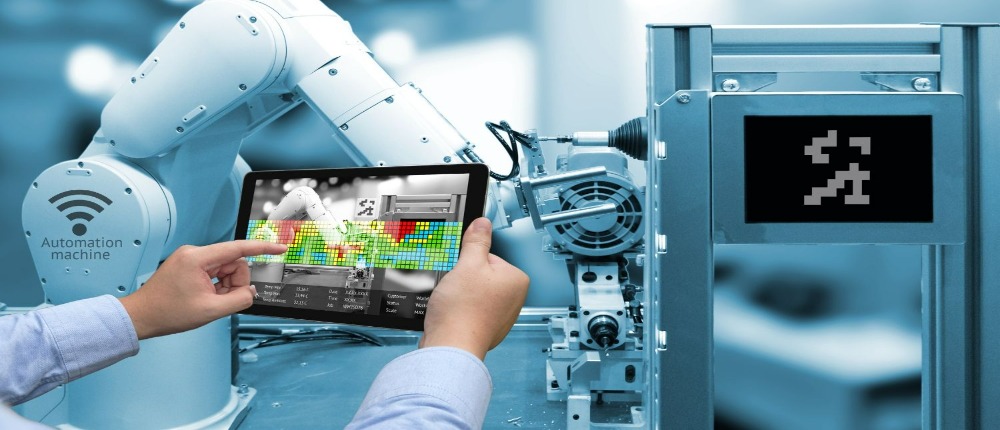
Around 67% of companies are using automation technology, of which 31% have completely automated at least one major function. AI automation will make technology more efficient and economical, so you can imagine how big a market is already ready for AI automation. Use of AI is completely transforming automation technology.
AI is making automation technology more cognitive.
AI automation is able to analyze and process huge amounts of information in a short time. Machine learning algorithms are used in AI automation. So it can recognize and analyze those nuances and signals or symptoms that are not possible with human intelligence or traditional automation techniques. With these new cognitive abilities, AI systems are able to interpret various data, such as physical readings, temperature, or other information, chemical signals, or information or text, images, and videos. Through this, even the most minute changes and analysis of extremely large amounts of data can be done easily and quickly. This is not possible through traditional automation techniques.

AI makes automation more accurate by reducing errors.
AI-powered automation reduces human intervention and has the ability to analyze data more quickly, making it more accurate. This makes it extremely useful for industries where accuracy is required, such as strategic industries, finance, medicine, and advanced design.
Efficient management of end-to-end automation processes
AI makes efficient integration and simplification of various systems of automation systems. Due to this, the management of the entire workflow becomes simple and accuracy increases.
For example, from production to supply chain management can be adjusted simultaneously with AI. In this process, AI manages and executes the process efficiently, accurately, and quickly, from raw material management, production, stock maintenance, order processing and delivery, customer service and inquiries, to inventory tracking and identifying and eliminating bottlenecks in the process. AI provides the automation system with the ability to seamlessly integrate and combine with any existing system. It can also develop the ability of seamless transition between tasks while organizing the necessary steps of the process.
AI improves scalability and adaptability
The biggest capability of AI automation is its Machine Learning algorithm, which makes it more scalable. Traditional automation systems can only accept limited changes. But it cannot auto-upgrade according to excessive changes like product design or other changes in accordance with the demand of the market. And its upgrade is also an expensive process. But the Machine Learning algorithm of AI makes the automation system adaptable. Due to this, it is also able to do other types of processes apart from just repetitive processes. Because AI also stores new data and keeps upgrading while analyzing old data and new data. Due to this, it is able to do new and modified tasks as well. AI systems continue to perform consistently as businesses expand, even when processing larger datasets and more complex tasks. This level of adaptability ensures that AI-powered automation remains valuable and relevant even as organizational needs evolve.
More efficient and productive.
AI-powered automation is able to streamline complex processes with ease due to its accuracy, speed, and adaptability, and is also capable of identifying and eliminating bottlenecks. As a result, AI automation systems are able to make quick decisions and work with accuracy. That directly leads to higher productivity and quality.
Challenges associated with intelligent automation
Current employee resistance.
The biggest reason for adopting automation by industries is the reduced need for human labor due to it. Due to which industries save on manpower costs and other expenses related to them. AI makes automation more efficient, and the need for human labor reduces even further. So the biggest opposition to this is from current employees and other workers' organizations. Because they consider it an enemy of human employment.
Excessive dependency on technology.
This is a process in which there is complete dependence on technology. In this situation, even a small technical inefficiency or failure can disrupt the entire process. That can cause huge economic losses by stopping the entire business activity.
Data quality and reliability.
Building machine learning algorithms for AI requires a large amount of accurate data. This can vary from process to process. This process can be lengthy and expensive in the initial stages.
Along with this, the availability of quality and accurate data is also a challenge.
Cyber Security and Data Privacy.
AI automated systems are remotely accessible and are also connected to the internet for other functional accessibility. Due to this, they become highly vulnerable to cyber-attacks. In this situation, it becomes necessary to implement strong cybersecurity provisions, but even then, extreme vigilance is required to ensure 100% protection from cyber-attacks. Automated systems have end-to-end process integration. Collecting and processing data in these systems can raise privacy concerns, which require compliance with strict data security regulations.
High cost of initial implementation
The initial cost of AI automation is very high; however, its use proves cost-effective in the long run due to improved and increased productivity and reduced human labor costs. But it is an expensive technology for small industries or low production units.
AI has its limitations, and right now,w it would be an exaggeration to compare it with human discretion and human intelligence. While there may still posers where decisions made through human discretion and creativity can be effective, the effectiveness of AI and the importance of human skills cannot be denied. Concerns and speculations about the ethics of AI models will also persist. The acceptance of AI automation is rapidly growing in the industrial world. The global AI-powered enterprise automation market was estimated to be $16.42 billion in 2024. This will grow to $135.06 billion by 2034. AI automation has now become a basic necessity for sectors ranging from healthcare to manufacturing and finance. However, AI is in its initial stages, and automation is ready to enter a new era by adjusting to AI. The future is one of improvement of this AI technology and of new hopes.