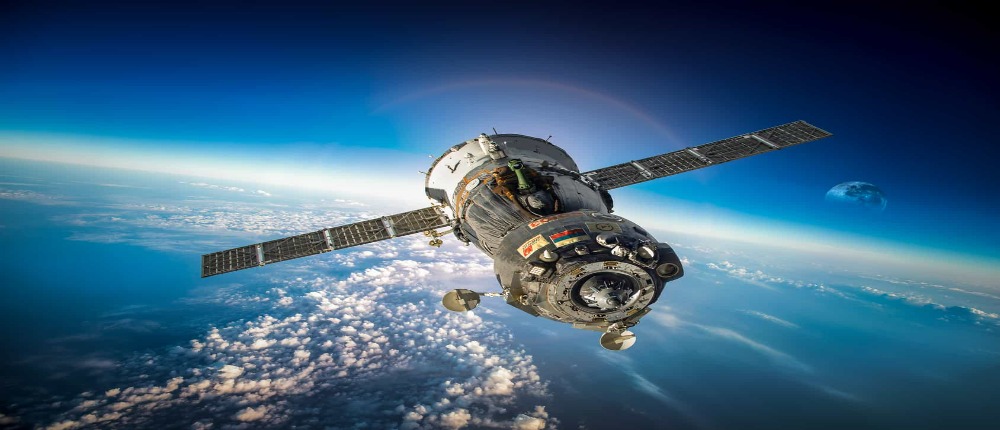
Although astronomy has ancient roots, it was the strategic importance of man-made satellites during World War II that gave birth to the modern space industry — a field that has now evolved into a thriving global space economy. During the Cold War, the United States and the Soviet Union fiercely competed for dominance in space. Today, that race has expanded, with many more nations and private players joining in. What was once a purely research-oriented sector has now transformed into a major commercial enterprise. Alongside government agencies, private companies like SpaceX, Blue Origin, Astroscale, Astroforge, and SpacePharma are redefining space exploration — and making serious money doing it. In addition, a wide range of tech manufacturers and support companies are generating substantial revenue by supplying equipment and technical expertise to the space industry. With SpaceX’s plans to send tourists beyond Earth’s atmosphere, space exploration is no longer limited to national strategy or scientific curiosity. It’s now a high-growth economic frontier attracting top global investors and corporations.
The Expanding Space Economy
In recent years, the entry of private firms has driven explosive growth in the space economy. The market, valued at $531 billion in 2022, reached $613 billion in 2024, and is projected to surpass $1 trillion by 2032. Even now, NASA’s budget still accounts for about 55% of global space spending — a testament to the U.S. government’s central role in the field.
Major Growth Drivers in the Space Economy
1. Growing Government Investment
With satellites playing increasingly critical roles in defense, communication, and navigation, governments around the world are investing heavily in space technology. In 2024, global government spending reached $135 billion, with the U.S. contributing over half, $79.7 billion. However, much of this funding still supports military and strategic initiatives.
2. Space Tourism Takes Off
Space tourism represents one of the most exciting frontiers in the space economy. Companies like SpaceX and Blue Origin have been offering commercial flights since 2021, attracting both investors and high-profile customers. The market for space tourism is expected to be worth $830 million in 2024, although only a handful of missions have been launched so far.
The experience remains a luxury — with ticket prices ranging from $250,000 for a suborbital flight to $70 million for a multi-day orbital mission. Still, the world’s wealthiest individuals are eager to be part of this bold new adventure.
3. Reusable Rockets and Cost Efficiency

Reusable rocket technology — pioneered by SpaceX, Blue Origin, and United Launch Alliance (ULA) — has been a game-changer. Following the successful testing of SpaceX’s reusable boosters, the cost of launching payloads into orbit has dropped dramatically. This reduction has made space more accessible, enabling smaller nations and private players to plan their own missions.
4. The Satellite Launch Boom
The year 2025 set a new record — with a satellite launch occurring roughly every 28 hours. Nations such as Pakistan and Botswana celebrated their first satellite launches. Meanwhile, companies like SpaceX (Starlink), Amazon Kuiper, and Eutelsat OneWeb are rapidly expanding global broadband and communication networks. Many countries are now collaborating with private space agencies to advance their own satellite programs.
5. The Emerging Cislunar Economy
While the United States remains the only country to have sent astronauts to the Moon, other nations — including India, China, and Russia — are planning to follow suit. Governments and private firms alike are now exploring opportunities between Earth and the Moon, including lunar mining, permanent habitats, and logistics infrastructure for off-world industries. Although these projects demand immense technical capability and investment, they represent a visionary leap toward a new industrial frontier.
6. Expanding Cooperative Ventures
Space exploration requires sophisticated infrastructure, advanced materials, and world-class engineering talent. Many smaller firms are now entering the ecosystem, providing components, software, and support for major missions. Across the U.S., India, China, and Europe, tech innovators are carving out profitable niches in this growing market.
The Future of Space Commerce
The growing dominance of the private sector continues to reshape the global space economy. Roughly 78% of future growth is expected to come from commercial activities such as satellite communications, Earth observation, and space tourism — shifting the balance away from government-funded programs.
All signs point to 2025 as a pivotal year — one that will see the continued commercialization of space, major infrastructure development, and the rise of next-generation technologies. Together, these trends are transforming space into a cornerstone of economic growth, national security, and innovation — paving the way for a multi-trillion-dollar space future.